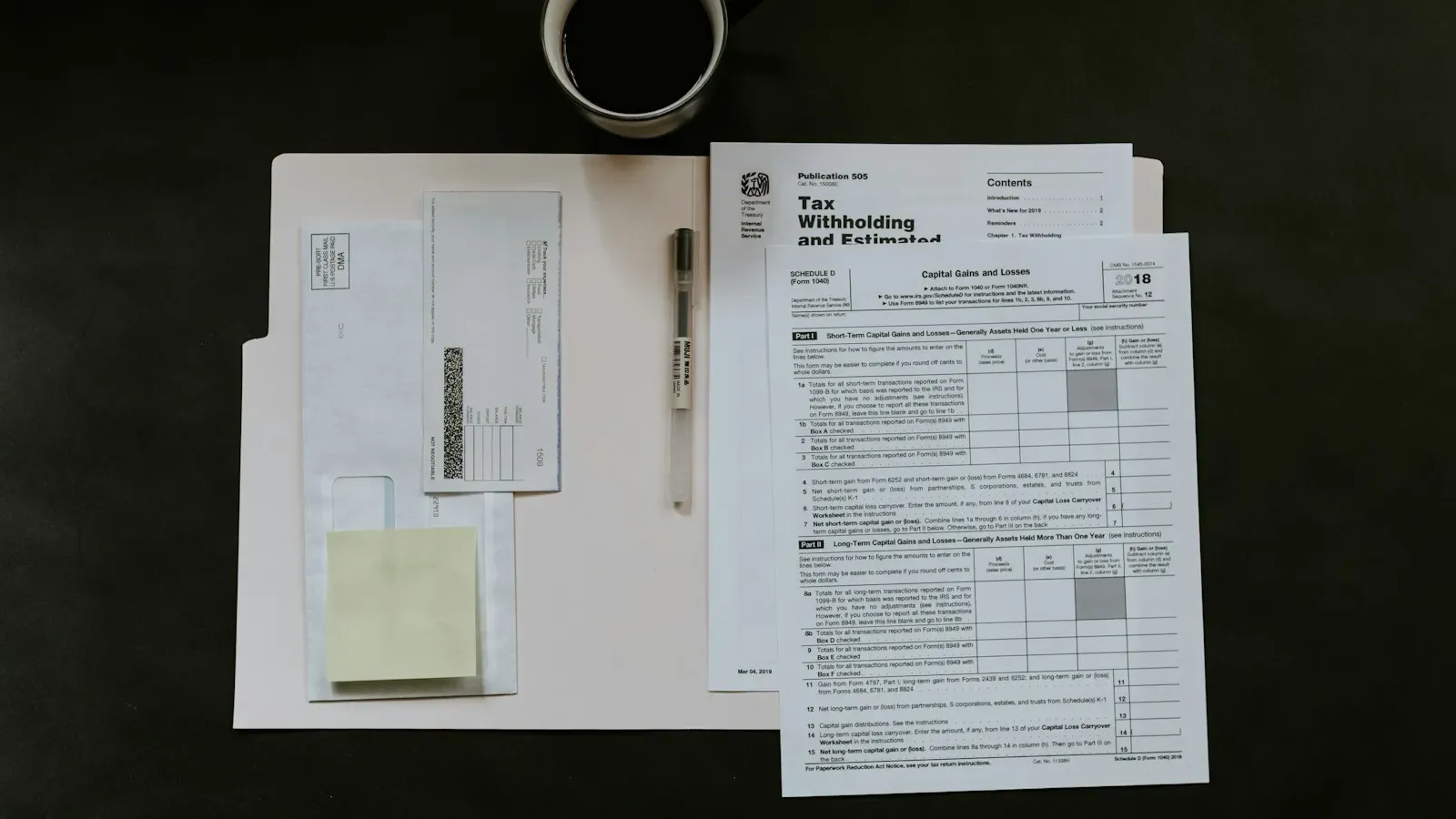
Yes, you report side income under $600, and you report it under $100 too. The IRS says you must report all income on your tax return even if you don’t receive a Form 1099 from the businesses that pay you, and its Form 1099-K guidance says all income, no matter the amount, is taxable unless the tax law says it isn’t. So the question hiding behind “under $600” is a different one: which of the numbers floating around change what you owe or what you have to file?
There are three of them, and they get mixed up all the time. $600, $2,000 and $20,000 are about forms that payers send. $400 is about self-employment tax. Each applies to a form or to a single tax, and none removes income from your return. This guide goes through each one, shows what a small side income costs in 2026 using a hypothetical worker, and covers how to report it and how to pay during the year. If you’re new to all of this, our first-time freelancer filing guide shows the full return from start to finish.
The short answer
Income from a side job, a gig app, a few online sales or a one-off project is taxable when you earn it. On its gig work page the IRS says you must report all income on your tax return, even if you don’t receive Forms 1099 from the businesses that pay you. On the Form 1099-K FAQ it says the reporting threshold doesn’t affect whether payments are taxable or whether a tax return must be filed.
The amount matters in two ways. It changes how much tax you owe, and once your net earnings from self-employment reach $400 it adds self-employment tax and a filing duty.
Where the $600 comes from, and why it moved
The $600 was a form threshold, the level people associated with 1099s for years. A May 2023 IRS tax tip, which now carries a “historical content” notice, says that if you accept more than $600 for goods and services through online marketplaces or payment apps you could receive a Form 1099-K. That describes the rule as it stood then. It was never a tax-free allowance.
The forms have moved since, each on its own schedule:
- Form 1099-NEC, for payments from a client. The IRS instructions say that for tax years beginning after 2025 the minimum threshold for reporting certain payments increased to $2,000. Our 1099-NEC vs. 1099-K guide covers who sends which form.
- Form 1099-K from payment apps and marketplaces. The IRS FAQ says the 2025 law retroactively restored the earlier threshold, so these platforms don’t have to file unless gross payments exceed $20,000 and the number of transactions exceeds 200.
- Form 1099-K from card payments. The same FAQ says there is no minimum. If you received $0.01 through a payment card transaction, you should receive a form for it.
A platform may still send a 1099-K below the federal levels, and your state may set a lower threshold, per the IRS FAQ. A client who pays you $900 for a logo may not have to send anything at all, because the reporting level for that form is now $2,000. In every case, whether you got a form has no effect on whether the income is taxable.
Watch out
A missing form tells you nothing about what you owe. The IRS says to use your own sales receipts to report any payments that weren’t on a 1099 or W-2, so keep your own record of every payment.
The $400 rule is the one that changes your return
The IRS says you must file a tax return if you have net earnings from self-employment of $400 or more from gig work, even if it’s a side job, part-time or temporary. The 2025 Form 1040 instructions list the same trigger in their chart of situations when you must file.
Net earnings come from profit. On Schedule SE you start with your net profit from Schedule C and multiply it by 92.35%. If the result is less than $400, the form says to stop: you don’t owe self-employment tax. That leaves two cases:
- Net earnings under $400. No self-employment tax and no filing duty from the side income alone. The income is still taxable and goes on your return if you file.
- Net earnings of $400 or more. You owe self-employment tax on the whole amount, and the $400 trigger requires you to file. The rate is 15.3%, made up of 12.4% for Social Security and 2.9% for Medicare, which our self-employment tax guide works through.
The profit that lands at $400 of net earnings is about $433, because of the 92.35% factor. The examples below stay away from that edge on purpose, since a few dollars either side changes the answer.
What a small side income costs: three examples
The numbers below are hypothetical. They assume a single filer with a $55,000 salary, the standard deduction, no state tax and no credits, and they use the same 2026 calculation behind our Freelance Tax Calculator. The “extra tax” is the difference between the return with the side income and the same return without it. The calculation includes the qualified business income deduction, which lowers the income tax on the profit.
| Side profit | Net earnings (x 92.35%) | Self-employment tax | Extra income tax | Extra tax in total |
|---|---|---|---|---|
| $380 | $351 | $0 | $36 | $36 |
| $540 | $499 | $76 | $48 | $124 |
| $3,000 | $2,771 | $424 | $268 | $692 |
$380
- Net earnings (x 92.35%)
- $351
- Self-employment tax
- $0
- Extra income tax
- $36
- Extra tax in total
- $36
$540
- Net earnings (x 92.35%)
- $499
- Self-employment tax
- $76
- Extra income tax
- $48
- Extra tax in total
- $124
$3,000
- Net earnings (x 92.35%)
- $2,771
- Self-employment tax
- $424
- Extra income tax
- $268
- Extra tax in total
- $692
Hypothetical case: single filer, $55,000 of W-2 wages, 2026 standard deduction and brackets, the QBI deduction applied, no state tax and no credits. Run through the site's 2026 federal tax estimate with and without the side profit. Side profit is gross receipts minus business expenses. Rules: 2025 Schedule SE (92.35% and the stop below $400 of net earnings) and the IRS page on managing taxes for gig work.
Read the first row against the second. At $380 of profit the net earnings are $351, under the $400 line, so there is no self-employment tax and the only cost is $36 of income tax. At $540 the net earnings pass $400, self-employment tax of $76 kicks in, and the total rises to $124 even though the profit went up by only $160. That jump is the practical meaning of the $400 rule.
The third row is closer to a real side business. On $3,000 of profit the total is $692, about 23% of the profit, the kind of figure to hold back from each payment. Our set-aside guide explains how to pick a percentage that fits your situation.

How to report it
Self-employment income goes on Schedule C. The 2025 Form 1040 instructions say not to report it on the “other income” lines of Schedule 1, and that you must use Schedule C even if you don’t have any business expenses. The Schedule C profit then flows to Schedule SE for the self-employment tax and to your Form 1040. The IRS says to use your sales receipts to report any payments not reported to you on a 1099 or W-2.
One detail about a 1099-K deserves attention. The IRS FAQ says the gross payment amount in Box 1a doesn’t include adjustments for fees, credits, refunds, shipping or discounts. Those items are not income, and you can deduct them from the gross amount when you put the income on your return. So a 1099-K can show a bigger number than what you earned. Keep the fee statements from the platform.
Hobby or business
The IRS says the biggest difference is that businesses operate to make a profit while hobbies are for pleasure or recreation. Its list of questions includes whether you carry on the activity in a businesslike manner and keep accurate books and records, and whether you depend on the income for your livelihood. No single factor decides it.
The labels matter for reporting. The 1040 instructions send income from an activity not engaged in for profit to line 8j of Schedule 1 and treat hobby income as not self-employment income. Publication 334 adds that if you don’t carry on a business to make a profit, there is a limit on the deductions you can take, and that you generally can’t use a loss from the activity to offset other income. The income is reported either way, and a tax preparer can help if your activity sits between the two.
Expenses lower the profit that gets taxed
Because the tax is figured on profit, the costs of earning the money matter even on a small side income. Publication 334 describes a deductible business expense as ordinary and necessary, and says that if an expense is partly business and partly personal you separate the personal part, which is generally not deductible. Our freelancer deductions guide lists the main categories, and the startup costs guide covers money spent before your first dollar of income.
Selling goods online works the same way, with the cost of what you sold as an expense; see Etsy, eBay and Amazon seller taxes.
Paying during the year
If you work as an employee and do gig work on the side, the IRS says you may avoid estimated tax payments on the gig income by withholding more from your paycheck. It points you to its Tax Withholding Estimator, then to a new Form W-4 for your employer.
If you’re an independent contractor with no employer to adjust, the IRS says you may have to pay quarterly estimated taxes, and that you can avoid a penalty by paying enough tax on time. The 2026 Form 1040-ES general rule applies when you expect to owe at least $1,000 in tax after subtracting withholding and refundable credits, and your withholding and credits are expected to be less than the smaller of 90% of this year’s tax or 100% of last year’s tax (110% if your 2025 AGI was over $150,000, or $75,000 married filing separately). Our quarterly estimated tax guide covers the four dates and how the safe harbor works.
If you missed reporting a past year
If you earned side income in an earlier year and left it off your return, the fix is a Form 1040-X. The IRS says so on its gig work page: to correct a return you already filed, use Form 1040-X. Our amended return guide explains the time limits, how to file it and what happens to the tax and interest.
Why the small amounts still matter
The Social Security Administration says you report your self-employment earnings for Social Security when you file your income tax return, and that net earnings of $400 or more must go on Schedule SE. The SSA also says benefits are based on how much you earned across your career. Our Social Security guide for the self-employed explains how that record turns into a benefit.
How we got these figures
The all-income rule, the $400 filing trigger and the estimated tax and withholding guidance come from the IRS page on managing taxes for gig work and the 2025 Form 1040 instructions. The 92.35% step and the stop at $400 come from the 2025 Schedule SE. The $2,000 threshold is from the IRS instructions for Forms 1099-MISC and 1099-NEC, and the $20,000 and 200 transaction threshold and the card-payment rule are from the 1099-K FAQ. The $600 figure is from IRS Tax Tip 2023-61 (May 3, 2023, historical content), cited as a past figure; the hobby factors come from the same tip, the line 8j instruction from the Form 1040 instructions and the limit on hobby deductions from Publication 334. The Social Security statements are from the SSA publications If You Are Self-Employed and Retirement Benefits (January 2026). We opened the sources on October 19, 2026.
The salary, the side profit amounts and the resulting taxes in the table are hypothetical, from our own 2026 federal estimate for a single filer with the standard deduction, without state tax, credits or other income. They illustrate how the rules work for one assumed situation.
Note
This is general information, not tax advice for your situation. Whether your activity is a business or a hobby, and how your state treats small amounts of income, depend on the facts, so confirm them with a tax professional before you file.