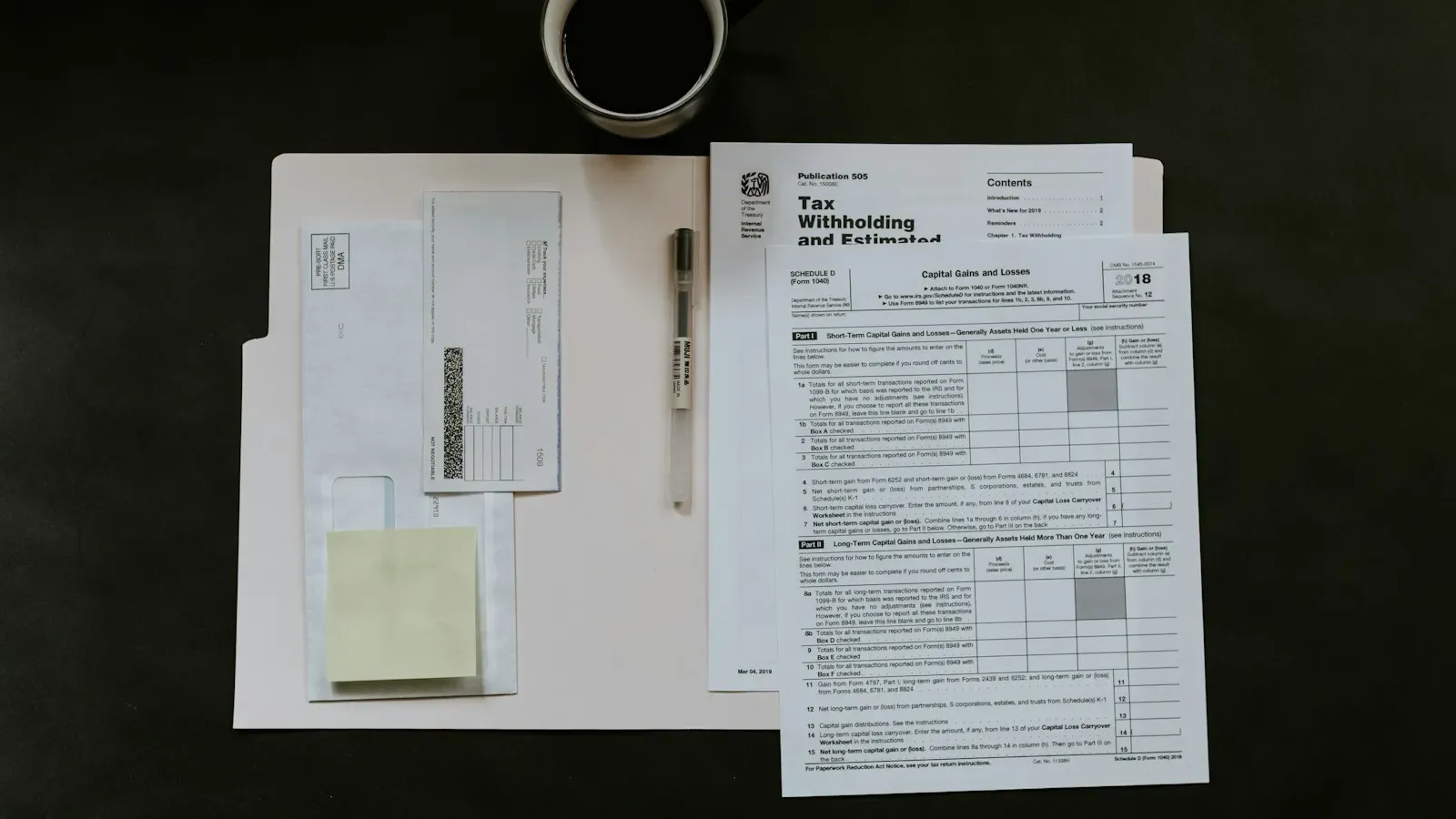
If you sell on Etsy, eBay or Amazon, the 1099-K you get in January is the gross amount buyers paid through the platform. It isn’t your profit, and you don’t pay tax on it. You report it as your sales, then subtract returns, the cost of the goods you sold and your business expenses, and pay tax on what’s left. In the example below, $62,000 on a 1099-K turns into $23,900 of profit and $3,866 of federal tax, against $12,498 if someone taxed the whole $62,000.
The middle step is where product sellers need the most care. Freelancers who sell a service go straight from income to expenses. A seller has a second layer, cost of goods sold, and it follows its own rules about inventory. This guide walks through it with real numbers. For who sends a 1099-K and the thresholds, see our 1099-NEC vs. 1099-K guide, and for filing in general, the first-time filing guide.
What the 1099-K does and doesn’t tell you
The IRS says the Form 1099-K does not account for the original purchase price of items sold, or whether they were sold at a gain or a loss. It also says that all income is taxable unless the law says it isn’t, even if no form arrives. So you use the form as one record of your sales, together with your own books, to work out your real numbers. The gross figure is the starting point on Schedule C. Then Publication 334 has you take these steps:
- Subtract refunds, rebates and allowances you gave customers (line 2) to get net receipts.
- Subtract the cost of goods sold (line 4). The result is your gross profit.
- Subtract your business expenses to get net profit.
The platform’s refund and fee records, plus your bank deposits, are what you reconcile the form against. If the 1099-K total doesn’t match your records, work out why before you file.
What the box 1a figure includes
The IRS says the gross payment amount in Box 1a reports the total dollar amount of reportable payment transactions and does not include adjustments for fees, credits, refunds, shipping, cash equivalents or discounts. It adds that those items are not income, so you can deduct them from the gross amount when you include the income on your return. The figure also ignores the original purchase price of what you sold. That is why the platform’s own statements matter.
On who gets a form, the IRS says a payment app or online marketplace must report when total gross payments exceed $20,000 and there are more than 200 transactions, but it may send a form for less, and your state may use a lower threshold. A card processor has no minimum. A missing form changes nothing about whether the income is taxable. The 1099-NEC vs. 1099-K guide covers the thresholds in detail.
Cost of goods sold
Publication 334 says this applies if you make, buy or sell goods to produce income. Schedule C Part III figures it in eight lines:
| Line | What goes there | Seller example |
|---|---|---|
| 35 | Inventory at the beginning of the year | Stock you held on January 1, at cost |
| 36 | Purchases, less items you took for personal use | Wholesale buys, supplies you resell |
| 37 | Cost of labor (not what you pay yourself) | Wages for people who help make the product; resellers usually have none |
| 38 | Materials and supplies | Clay, fabric, wax or other things you make products from |
| 39 | Other costs | Freight-in on what you buy, and packaging that is part of the product |
| 40 | Add lines 35 through 39 | Cost of goods available for sale |
| 41 | Inventory at the end of the year | Stock still unsold on December 31, at cost |
| 42 | Cost of goods sold: line 40 minus line 41 | Goes on Schedule C line 4 |
35
- What goes there
- Inventory at the beginning of the year
- Seller example
- Stock you held on January 1, at cost
36
- What goes there
- Purchases, less items you took for personal use
- Seller example
- Wholesale buys, supplies you resell
37
- What goes there
- Cost of labor (not what you pay yourself)
- Seller example
- Wages for people who help make the product; resellers usually have none
38
- What goes there
- Materials and supplies
- Seller example
- Clay, fabric, wax or other things you make products from
39
- What goes there
- Other costs
- Seller example
- Freight-in on what you buy, and packaging that is part of the product
40
- What goes there
- Add lines 35 through 39
- Seller example
- Cost of goods available for sale
41
- What goes there
- Inventory at the end of the year
- Seller example
- Stock still unsold on December 31, at cost
42
- What goes there
- Cost of goods sold: line 40 minus line 41
- Seller example
- Goes on Schedule C line 4
Source: IRS Publication 334 (2025), chapter 6, and the 2025 Schedule C instructions. Opening inventory is normally the prior year's closing inventory, and you explain any difference.
The rule that costs people money is line 41. You don’t deduct stock until it sells. If you buy $10,000 of product in December and sell none of it, none of it reduces this year’s profit, and it becomes next year’s beginning inventory. Buying more inventory is not a way to lower your tax bill.
If you make what you sell, materials and supplies you use in making it are part of cost of goods sold. Publication 334 says containers and packages that are an integral part of a product you make belong there too, and that freight-in on materials and merchandise you buy for sale does as well. Containers that aren’t an integral part of the product are shipping or selling expenses. So a candle jar is part of the product, while the mailer you ship it in is a selling cost.
Inventory: the default and the small business choice
The default rule in Publication 334 is that if you produce, purchase or sell merchandise you must keep an inventory and use an accrual method for purchases and sales. A small business taxpayer can choose not to keep one. That means average annual gross receipts of $32 million or less for the 3 prior tax years for 2026 ($31 million was the 2025 amount in Publication 334), indexed for inflation, and not being a tax shelter. You must still use a method that clearly reflects income. The IRS says that is met if you treat inventory as non-incidental materials and supplies, deducting the cost in the year you provide the inventory to customers, or if your method matches your financial accounting treatment.
If you do keep an inventory, you value it at the start and end of every year with a method that follows generally accepted accounting principles for similar businesses and stays consistent from year to year. Inventory includes merchandise, raw materials, work in process, finished products and supplies that physically become part of the item for sale. Changing your method means filing Form 3115. The uniform capitalization rules, which pull more indirect costs into inventory, don’t apply to small business taxpayers. Which route fits depends on how you keep your books, so ask a tax professional before you pick one.
What goes into the purchases line
Publication 334 has several rules that decide what the purchases and labor lines hold:
- Use the prices you pay, so trade discounts reduce your cost. Returns and allowances on your own purchases are deducted from purchases.
- If you take merchandise for yourself or your family, exclude that cost from purchases and charge it to your drawing account. The guide to paying yourself explains how a draw works.
- Labor is usually part of cost of goods sold only in a manufacturing business. Small merchandisers usually have none, and other labor costs are deducted as selling or administrative expenses.
- Materials and supplies used in making goods are cost of goods sold. Those not used in the manufacturing process are deducted when you use them.
- Opening inventory is usually the closing inventory of the year before, and you explain any difference in a schedule attached to your return.
A worked example
Take a seller on one of these sites who gets a 1099-K for $62,000 in 2026. Single, no other income, no employees. We ran the profit through the same functions as our Freelance Tax Calculator.
| Schedule C step | Amount |
|---|---|
| Gross receipts (the 1099-K total) | $62,000 |
| Returns and refunds | -$2,000 |
| Net receipts | $60,000 |
| Beginning inventory | $4,000 |
| Purchases | $21,000 |
| Freight-in | $1,500 |
| Ending inventory | -$5,500 |
| Cost of goods sold | -$21,000 |
| Gross profit | $39,000 |
| Platform and payment fees | -$6,200 |
| Shipping to customers | -$4,300 |
| Packaging and supplies | -$1,800 |
| Advertising | -$2,200 |
| Software | -$600 |
| Net profit | $23,900 |
Gross receipts (the 1099-K total)
- Amount
- $62,000
Returns and refunds
- Amount
- -$2,000
Net receipts
- Amount
- $60,000
Beginning inventory
- Amount
- $4,000
Purchases
- Amount
- $21,000
Freight-in
- Amount
- $1,500
Ending inventory
- Amount
- -$5,500
Cost of goods sold
- Amount
- -$21,000
Gross profit
- Amount
- $39,000
Platform and payment fees
- Amount
- -$6,200
Shipping to customers
- Amount
- -$4,300
Packaging and supplies
- Amount
- -$1,800
Advertising
- Amount
- -$2,200
Software
- Amount
- -$600
Net profit
- Amount
- $23,900
Hypothetical numbers. Cost of goods sold: $4,000 + $21,000 + $1,500 - $5,500 = $21,000. Net profit: $60,000 - $21,000 - $15,100 of expenses.
On $23,900 of net profit, a single filer owes $3,377 of self-employment tax and $489 of federal income tax, $3,866 in all, which is 16.2% of profit. The standard deduction and the QBI deduction do most of the work on the income tax side. State tax is extra.
Now the two mistakes people make with the same shop:
| Approach | Net profit | Federal tax |
|---|---|---|
| Correct, with ending inventory | $23,900 | $3,866 |
| Taxed on the 1099-K total | $62,000 | $12,498 |
| Deducting the unsold $5,500 of stock too | $18,400 | $2,660 |
Correct, with ending inventory
- Net profit
- $23,900
- Federal tax
- $3,866
Taxed on the 1099-K total
- Net profit
- $62,000
- Federal tax
- $12,498
Deducting the unsold $5,500 of stock too
- Net profit
- $18,400
- Federal tax
- $2,660
Single filer, no other income, 2026 federal rates, standard deduction, QBI deduction, no state tax or credits. Self-employment tax and income tax together. The last row is wrong: stock you haven't sold isn't part of cost of goods sold.
Taxing the 1099-K total overpays by $8,632. Deducting stock you haven’t sold understates the tax by $1,206, and it’s the one that causes trouble in an audit. Both come down to the same thing: a clean record of what you held on January 1 and what you hold on December 31.

The expenses sellers forget
Cost of goods sold covers the product. The rest of what it costs to run the shop is a business expense on Schedule C, listed in our freelancer deductions guide:
- Platform and marketplace fees and payment processing, which go on the commissions and fees line. List them once only.
- Shipping you pay to send orders, postage, mailers and labels.
- Advertising, including promoted listings.
- Software, accounting tools and photo or listing tools.
- A home office if you use a space regularly and exclusively for the business, and storage that meets the same test. See the home office guide.
- Mileage to the post office, a supplier or a market: the mileage guide covers the rate and the log.
The platform’s own statement is useful here. Most sites give you a monthly or yearly breakdown of fees, refunds and payouts. Download it each month so the numbers are on file.
Business or hobby
If you sell as a business, you file Schedule C. If it’s a hobby, the income is still taxable, but the deductions are limited. The IRS says no single thing decides it, and it looks at whether you run the activity in a businesslike way and keep accurate books, whether your time and effort show you intend to make a profit, whether you depend on the income, whether you change your methods to improve profit, and whether you have the knowledge to succeed. Publication 334 says that if you don’t carry on the activity to make a profit, there’s a limit on your deductions, and that you generally can’t use a loss from it to offset other income.
A shop with a separate bank account, tracked inventory and a stated goal of earning a profit is on firm ground. A one-off clear-out of your own belongings is generally not a business, and the 1099-K issue there is different: the form shows only the sale price, not what you paid, so you need your own records.
What you pay tax on and when
Profit from a shop is subject to self-employment tax and income tax, like any Schedule C income. If you expect to owe $1,000 or more, you generally pay estimated taxes during the year, per the 2026 Form 1040-ES. Our quarterly payments guide has the dates, and the set-aside guide covers how much of each payout to put away. The set-aside share applies to profit, so a shop with a thin margin sets aside much less of each sale than a service business would. In our example it’s 16.2% of profit, which is 6.2% of the $62,000 on the 1099-K.
Note
Sales tax is separate from everything here. This guide covers federal income and self-employment tax only. States set their own rules for collecting and remitting sales tax, including how marketplaces handle it, so check your state’s tax agency.
Records that make January easy
- A monthly sales and fees record from each platform, saved as a file.
- Your inventory on January 1 and December 31, counted and valued at cost, with the date you counted.
- Receipts for purchases, shipping and supplies.
- A simple log of anything you took for personal use, since purchases are reduced by items you took for yourself.
The deductions guide covers how long to keep it all.
How we got these rules
The Schedule C steps from gross receipts to gross profit, the Part III lines, what goes in cost of goods sold, freight-in, containers, the small business taxpayer exception and the hobby limit come from IRS Publication 334 (2025) and the 2025 Schedule C instructions. The 2026 gross receipts amount for the small business taxpayer test comes from Revenue Procedure 2025-32. What a 1099-K does and doesn’t show comes from the IRS Form 1099-K FAQs, and the hobby factors from the IRS hobby or business page. The estimated tax rule comes from the 2026 Form 1040-ES. We opened them on October 14, 2026. The inventory method choices, purchase rules and labor rule come from chapters 2 and 6 of Publication 334, and the box 1a and threshold details from the IRS 1099-K FAQs. The example is hypothetical, and its tax figures are our own arithmetic from the same federal functions our calculators use, for a single filer with no other income and no state tax. We did not cover state sales tax. For how we choose sources, see How We Research.
This is general information, not tax advice for your situation. Inventory and accounting-method choices have consequences, so confirm them with a tax professional before you file.