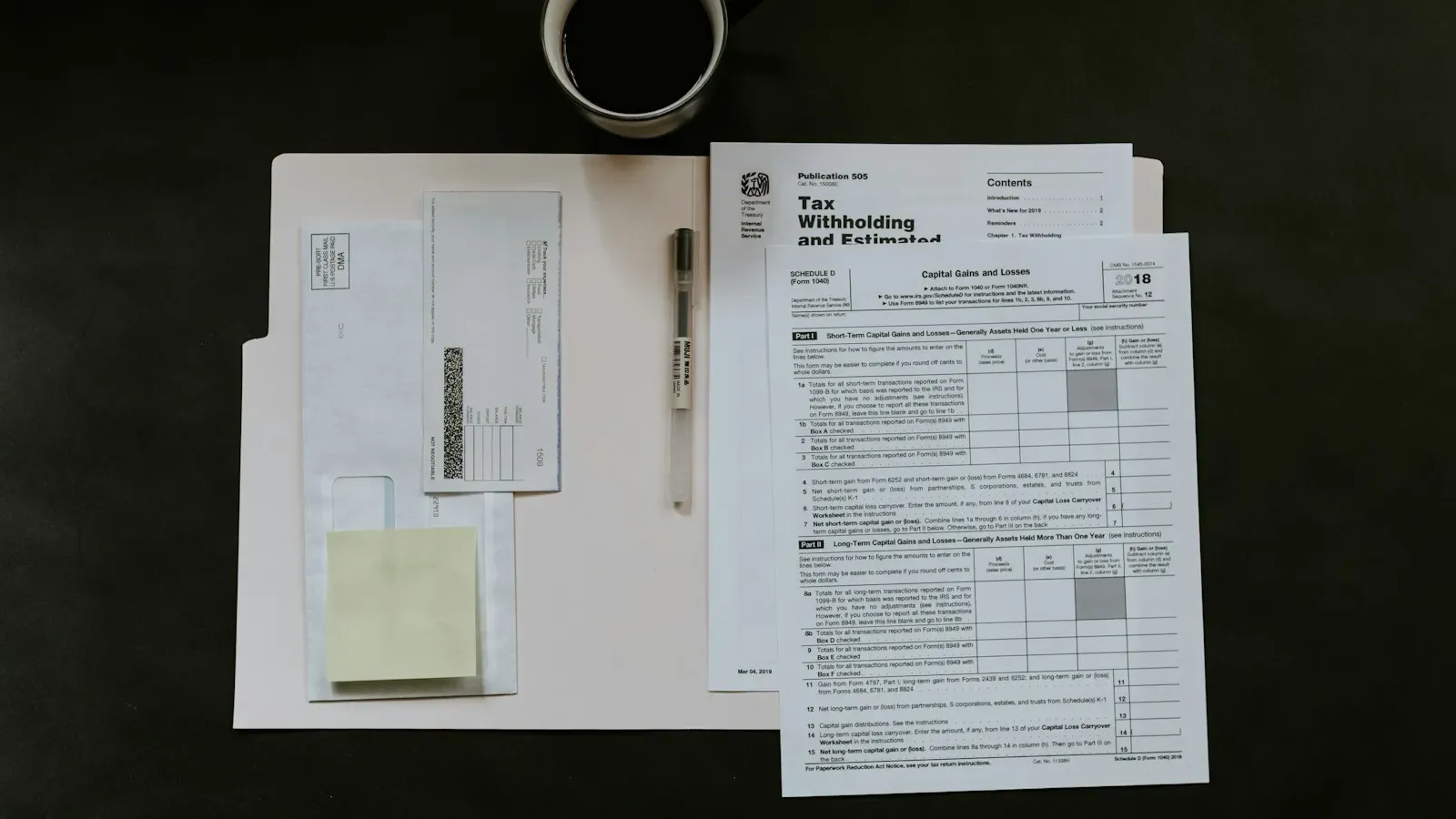
If your income comes in lumps, four equal estimated tax payments can mean sending the IRS money months before you earn it. The IRS has a second way to figure each payment, the annualized income installment method. Each installment is based on what you earned through that point in the year, and in total it never asks for more than the equal-payment method does. You claim it on Form 2210 with Schedule AI when you file.
This guide works through one 2026 example. A freelancer who earns most of the year’s profit in the fall is required to have paid $11,237 by September 15 under equal payments, and $3,935 under the annualized method. The dates, the safe harbor and the basic worksheet are covered in Estimated Tax Deadlines for 2026 and the Safe Harbor Rule and Quarterly Estimated Taxes for the Self-Employed, so I won’t repeat them here. The Quarterly Estimated Tax Calculator figures the regular equal installments, which is the version this page compares against.
Who this is for
The 2026 Form 1040-ES describes the case in one sentence: you may be able to lower or eliminate your required payment for one or more periods if your income arrives unevenly, for example because you run a seasonal business or have a large capital gain late in the year. The same page says to use it if a large change in income after March 31 means you only then start owing estimated payments.
For freelancers that covers a lot of ground. A content creator whose sponsorship money lands in a few big months. A delivery or rideshare driver who takes a few slow months and then works double shifts. A booth renter who builds a client base over the year, or who takes time off for a baby or an injury. If your income is steady, the equal method is simpler and gives about the same answer, so you can skip this.
One thing to be straight about: equal payments don’t cause a penalty. If you pay your required quarter on time, you owe none. The trouble starts when you can’t afford the equal amount in the slow months. Then you either find the cash somewhere or fall short. The annualized method lets what you owe by April track what you had earned by April.

How the method works
Publication 505 (2026) says the method annualizes your tax at the end of each period, based on a reasonable estimate of the income, deductions and other items that arose from the start of the year through the end of that period. It uses four periods, and each one includes the ones before it:
| Period | Months | Annualization factor | Share of annual tax | Payment due |
|---|---|---|---|---|
| Jan 1 to Mar 31 | 3 | 4 | 22.5% | April 15, 2026 |
| Jan 1 to May 31 | 5 | 2.4 | 45% | June 15, 2026 |
| Jan 1 to Aug 31 | 8 | 1.5 | 67.5% | September 15, 2026 |
| Jan 1 to Dec 31 | 12 | 1 | 90% | January 15, 2027 |
Jan 1 to Mar 31
- Months
- 3
- Annualization factor
- 4
- Share of annual tax
- 22.5%
- Payment due
- April 15, 2026
Jan 1 to May 31
- Months
- 5
- Annualization factor
- 2.4
- Share of annual tax
- 45%
- Payment due
- June 15, 2026
Jan 1 to Aug 31
- Months
- 8
- Annualization factor
- 1.5
- Share of annual tax
- 67.5%
- Payment due
- September 15, 2026
Jan 1 to Dec 31
- Months
- 12
- Annualization factor
- 1
- Share of annual tax
- 90%
- Payment due
- January 15, 2027
From Worksheet 2-9 in Publication 505 (2026) and Schedule AI in the Form 2210 instructions, where the last column is called the applicable percentage.
For each period, you take your income so far, multiply it by the factor, and figure the whole tax on that annualized amount: income tax, plus self-employment tax. Then you multiply by the percentage in the table, which the IRS calls the applicable percentage. That is the total you must have paid by that due date. Subtract what the earlier periods already required, and the rest is this period’s installment.
Two details matter. First, the result can’t be negative: a slow period can require $0, and a later period catches up. Second, the IRS instructions for Schedule AI say each installment is the smaller of the annualized amount or the regular installment (increased by whatever you saved in earlier periods). That’s why the method can only lower your required payments over time, never raise them above the equal method.
If you keep your books on the cash method, as most freelancers do, the IRS instructions say to include the income you actually or constructively received during each period and the deductions you actually paid during it. An invoice you sent in March counts when the client pays it in June, not in March.
Worked example: a creator with a fall rush
Say you’re a single freelance creator in 2026. Your net profit (what Schedule C will show) builds like this:
| Period | Profit in the period | Profit so far |
|---|---|---|
| Jan 1 to Mar 31 | $6,000 | $6,000 |
| Apr 1 to May 31 | $4,000 | $10,000 |
| Jun 1 to Aug 31 | $12,000 | $22,000 |
| Sep 1 to Dec 31 | $58,000 | $80,000 |
Jan 1 to Mar 31
- Profit in the period
- $6,000
- Profit so far
- $6,000
Apr 1 to May 31
- Profit in the period
- $4,000
- Profit so far
- $10,000
Jun 1 to Aug 31
- Profit in the period
- $12,000
- Profit so far
- $22,000
Sep 1 to Dec 31
- Profit in the period
- $58,000
- Profit so far
- $80,000
An illustrative year. No other income, no withholding, no credits, no retirement contributions, standard deduction.
Your 2025 return showed $20,000 of total tax on an AGI under $150,000, so the 100% prior-year safe harbor would be $20,000. For all of 2026, the tax on $80,000 of profit comes to $16,648 (the same figure as the $80,000 example in the quarterly payments guide), and 90% of that is $14,983. The smaller number is $14,983, so that’s your required annual payment. Equal installments are $14,983 ÷ 4 = $3,745.75, about $3,746 each.
Here is the first column of the annualized worksheet, step by step:
- 1$6,000
Net profit, Jan 1 to Mar 31
- 2$5,541
Net earnings from self-employment
$6,000 × 92.35%
- 3$3,391
Annualized self-employment tax
$5,541 × 0.496 = $2,748 Social Security + $5,541 × 0.116 = $643 Medicare
- 4−$424
Deduction for half of the period's SE tax
$3,391 ÷ 8
- 5$5,576
AGI for the period
$6,000 − $424
- 6$22,304
Annualized income
$5,576 × 4
- 7−$16,100
Standard deduction (single)
- 8−$1,241
QBI deduction
20% × the smaller of $22,304 or $6,204 (income after the standard deduction)
- 9$4,963
Annualized taxable income
- 10$496
Income tax
$4,963 × 10%
- 11$3,887
Annualized total tax
$496 income tax + $3,391 SE tax
- 12$875
Required payment through the period
$3,887 × 22.5%
Rounded to whole dollars at each step, like the IRS worksheet. The QBI line assumes your qualified business income is your profit less the deductible half of SE tax. Federal only.
So by April 15 you must have paid $875, not $3,746. The next three columns work the same way, with the cumulative profit and the later factors:
| Through | Profit so far | Annualized tax | Share | Required so far |
|---|---|---|---|---|
| March 31 | $6,000 | $3,887 | 22.5% | $875 |
| May 31 | $10,000 | $3,888 | 45% | $1,750 |
| August 31 | $22,000 | $5,829 | 67.5% | $3,935 |
| December 31 | $80,000 | $16,648 | 90% | $14,983 |
March 31
- Profit so far
- $6,000
- Annualized tax
- $3,887
- Share
- 22.5%
- Required so far
- $875
May 31
- Profit so far
- $10,000
- Annualized tax
- $3,888
- Share
- 45%
- Required so far
- $1,750
August 31
- Profit so far
- $22,000
- Annualized tax
- $5,829
- Share
- 67.5%
- Required so far
- $3,935
December 31
- Profit so far
- $80,000
- Annualized tax
- $16,648
- Share
- 90%
- Required so far
- $14,983
Single filer, standard deduction, QBI deduction, 2026 rates. The August 31 and December 31 rows use the 2026 Social Security wage base of $184,500, prorated for the earlier periods, as Worksheet 2-9 does.
Laid against the due dates, here is what you’d have paid under each method:
| Due date | Equal payments, total so far | Annualized, total so far | Annualized payment that day |
|---|---|---|---|
| April 15, 2026 | $3,746 | $875 | $875 |
| June 15, 2026 | $7,492 | $1,750 | $875 |
| September 15, 2026 | $11,237 | $3,935 | $2,185 |
| January 15, 2027 | $14,983 | $14,983 | $11,048 |
April 15, 2026
- Equal payments, total so far
- $3,746
- Annualized, total so far
- $875
- Annualized payment that day
- $875
June 15, 2026
- Equal payments, total so far
- $7,492
- Annualized, total so far
- $1,750
- Annualized payment that day
- $875
September 15, 2026
- Equal payments, total so far
- $11,237
- Annualized, total so far
- $3,935
- Annualized payment that day
- $2,185
January 15, 2027
- Equal payments, total so far
- $14,983
- Annualized, total so far
- $14,983
- Annualized payment that day
- $11,048
Equal-payment totals are $3,745.75 per installment, rounded to the dollar. Both methods reach $14,983 by January 15, 2027.
Both columns end at $14,983. The difference is when the money leaves your account. With equal payments you’ve paid $11,237 by September 15, when you had earned $22,000 of profit by the end of August. With the annualized method it’s $3,935, which leaves $7,302 in your account until January. The January payment is where it shows up: $11,048 instead of $3,746.
Under both methods you’ll still owe $1,665 when you file ($16,648 total tax minus $14,983 paid), which is what a 90% safe harbor leaves.
What it does to the penalty
Say you’re that creator, and you couldn’t send $3,746 in April. You did pay on every due date, but only the amounts the annualized worksheet asked for: $875, $875, $2,185 and $11,048. What happens next depends on how you file.
| What you did | Paid by Jan 15, 2027 | Underpayment penalty |
|---|---|---|
| Four equal payments of about $3,746, on time | $14,983 | $0 |
| Paid $875, $875, $2,185 and $11,048, filed with the regular method | $14,983 | About $299 |
| Same payments, filed with Form 2210 and Schedule AI | $14,983 | $0 |
Four equal payments of about $3,746, on time
- Paid by Jan 15, 2027
- $14,983
- Underpayment penalty
- $0
Paid $875, $875, $2,185 and $11,048, filed with the regular method
- Paid by Jan 15, 2027
- $14,983
- Underpayment penalty
- About $299
Same payments, filed with Form 2210 and Schedule AI
- Paid by Jan 15, 2027
- $14,983
- Underpayment penalty
- $0
Penalty figured with the Form 2210 penalty worksheet: 6% for April 16 to June 30, 2026 and 7% for the quarters after that, per the IRS quarterly interest rates page. The 15 days from January 1 to January 15, 2027 assume the rate stays at 7% (about $21 of the total); the IRS hasn't published that quarter's rate.
Under the regular method, the shortfalls are $2,871 after April 15, $5,742 after June 15 and $7,302 after September 15, and each one accrues the penalty until a later payment covers it. The Form 2210 instructions say payments are applied first to the earliest underpayment. The penalty is figured separately for each due date, so paying everything in January doesn’t erase it. Schedule AI is what resets the required amounts to $875, $875, $2,185 and $11,048, and against those you underpaid nothing.
The penalty works like interest, so it’s small in a case like this. The point isn’t the $299. It’s that you can plan around when your income arrives and not scrape together money you haven’t earned yet.

How to claim it on your return
Publication 505 has the planning tool, Worksheet 2-9, which you can fill in after each period ends to see what the next payment should be. When you file, the IRS instructions give you these steps:
- Complete Schedule AI, Part I, and Part II for the self-employment tax. The amounts on line 27 of Schedule AI go on line 10 of Form 2210, Part III.
- Complete Part III to figure the penalty, including the penalty worksheet in the instructions.
- Check box C in Part II of Form 2210. The form describes it as “your income varied during the year and your penalty is reduced or eliminated” with the annualized method.
- Attach Form 2210 and Schedule AI to your return.
If you don’t check box B, C or D, the IRS will figure any penalty and bill you. With box C, you figure it yourself.
The form that’s current as I write this (October 2026) is the 2025 Form 2210, and the IRS page lists no 2026 version yet. The periods, factors and percentages are the same as in Publication 505 (2026). The dollar limits aren’t: Part II of the 2025 form prorates a full-year Social Security limit of $176,100, while Publication 505 (2026) uses $184,500. For 2026 figures, follow Publication 505 until the 2026 form is out.
Mistakes to avoid
- Using the method to plan but not to file. If you pay according to the annualized worksheet, you have to file Form 2210 with Schedule AI. Without it, the IRS compares your payments with the equal installments and sends a bill for the gap.
- Mixing methods. You can’t use Schedule AI for the April payment and the regular method for the rest. It’s all four due dates or none.
- Keeping books by invoice date. On the cash method, the income counts when you receive it and the expense counts when you pay it. A December equipment purchase doesn’t help your March period.
- Expecting it to lower your tax. It only moves when you must pay. The balance due in April is the same.
- Forgetting withholding from a W-2 job. Publication 505 treats withholding as paid evenly across the due dates, one quarter each, unless you choose the actual dates, which is box D on Form 2210. If you have a job on the side, that choice can matter.
- Skipping the safe harbor check. The annualized installments are capped by your regular installments, which come from the smaller of 90% of this year’s tax or 100% (110%) of last year’s. In the example, $14,983 is the cap because the 2025 tax was higher. The rules are in the deadlines guide.
Setting up for lumpy income
The method works best with a habit that has nothing to do with the IRS: put a share of every payment aside as it comes in, so the big month doesn’t catch you without cash. How Much Should I Set Aside for Taxes as a Freelancer? gives percentages by income level, and Saving for Retirement on Irregular Income covers the same problem for retirement contributions. If you want to see where the $16,648 in the example comes from, Self-Employment Tax Explained goes through the 92.35% step and the Social Security cap.
State income tax has its own estimated payment rules in most states that have an income tax, and I haven’t covered them here. Your state tax agency’s website has the forms and the schedule.
How we got these figures
The method, the periods, the factors and the percentages come from Publication 505 (2026), Worksheet 2-9, and from the Schedule AI pages of the Form 2210 instructions and form, which we opened on October 8, 2026. The 2026 due dates, the standard deduction and the Social Security wage base are from the 2026 Form 1040-ES, and the 2026 rate schedule is from Rev. Proc. 2025-32. The quarterly penalty rates are from the IRS quarterly interest rates page. The worked example is our own arithmetic, run twice, once with the same code as our calculators and once with a separate script, and both gave the same installments. The one assumption we had to make is how QBI is annualized, stated under the first worksheet. For how we choose sources in general, see How We Research.
This is general information, not tax advice for your situation. A tax professional can check your numbers before you file.