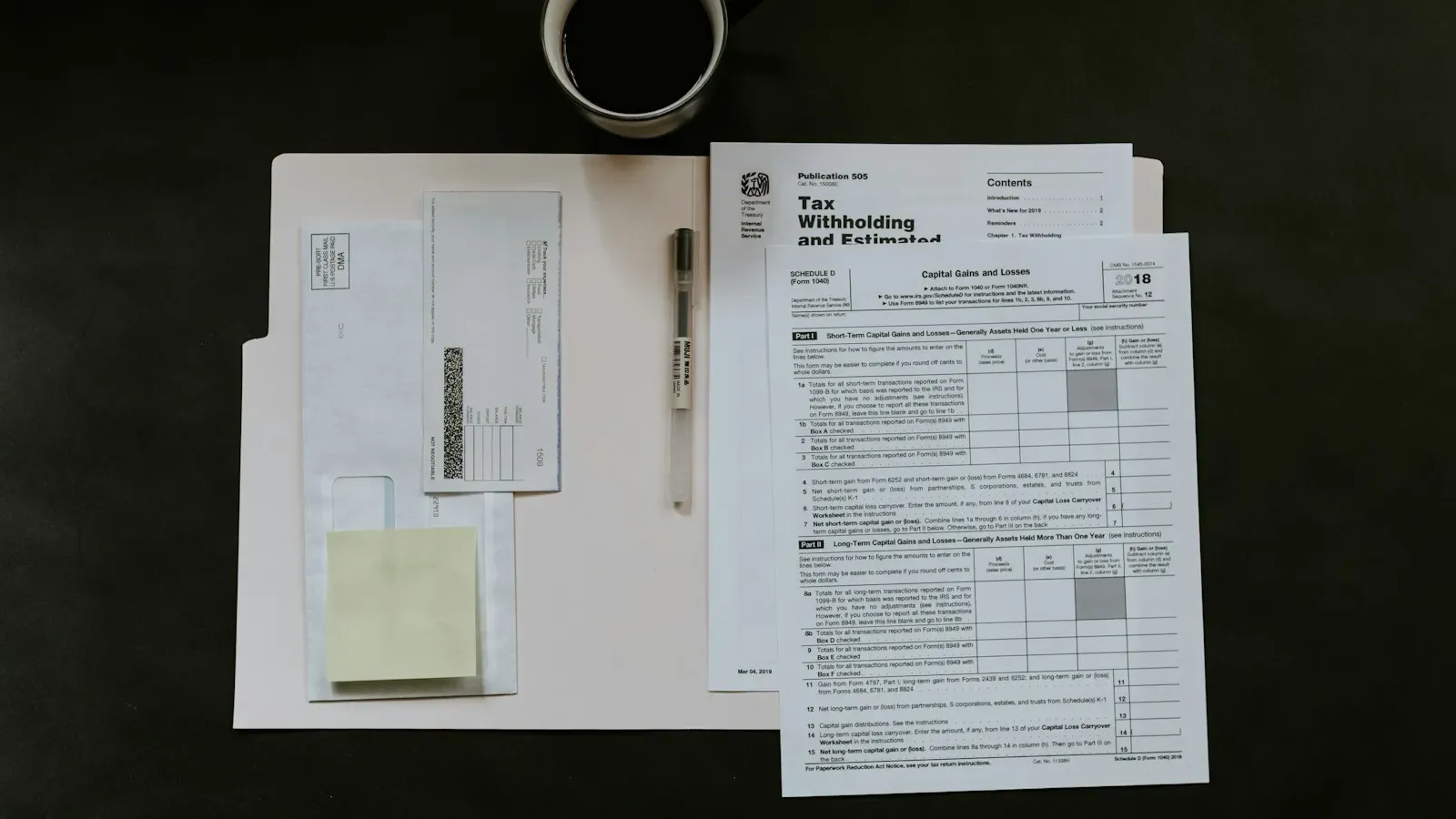
If you’re a U.S. citizen or resident and a client abroad pays you, the income goes on Schedule C like any other, converted to dollars, and it’s subject to self-employment tax. That’s the easy part. The two traps are what exchange rate to use and the reporting that applies if the money sits in a bank account outside the United States: an FBAR once the foreign accounts together pass $10,000, and possibly Form 8938 on your return.
Most of the guides on this are written for people who live abroad. This one is for the U.S.-based freelancer whose clients, or whose bank account, happen to be elsewhere. If you live abroad, Publication 54 is the starting point, because the rules on exclusions and housing are different. For the rest of your return, our first-time filing guide covers the basics that don’t change.
What changes and what doesn’t
| Item | What the IRS says | Where it goes |
|---|---|---|
| The income | Worldwide gross income counts; for the self-employed it's the Schedule C gross income line | Schedule C |
| Currency | Amounts must be stated in U.S. dollars | Schedule C, converted |
| Self-employment tax | Applies to self-employment income, including foreign income | Schedule SE |
| Foreign bank accounts above $10,000 combined | FBAR, due April 15, automatic extension to October 15 | FinCEN BSA E-Filing, separate from your return |
| Foreign financial assets above $50,000 (single, year-end) | Form 8938 | Attached to your tax return |
| Foreign income tax imposed on you | Credit on Form 1116, or an itemized deduction | Form 1116 with your return |
The income
- What the IRS says
- Worldwide gross income counts; for the self-employed it's the Schedule C gross income line
- Where it goes
- Schedule C
Currency
- What the IRS says
- Amounts must be stated in U.S. dollars
- Where it goes
- Schedule C, converted
Self-employment tax
- What the IRS says
- Applies to self-employment income, including foreign income
- Where it goes
- Schedule SE
Foreign bank accounts above $10,000 combined
- What the IRS says
- FBAR, due April 15, automatic extension to October 15
- Where it goes
- FinCEN BSA E-Filing, separate from your return
Foreign financial assets above $50,000 (single, year-end)
- What the IRS says
- Form 8938
- Where it goes
- Attached to your tax return
Foreign income tax imposed on you
- What the IRS says
- Credit on Form 1116, or an itemized deduction
- Where it goes
- Form 1116 with your return
Sources: IRS Publication 54; IRS FBAR page; IRS summary of FATCA reporting; IRS foreign tax credit page. Opened October 14, 2026.
Whether you have to file
Publication 54 says that if you are a U.S. citizen or resident alien your worldwide income is generally subject to U.S. income tax, regardless of where you live or where your clients are. The usual filing rules apply: for a self-employed person, gross income includes the amount on Schedule C, Part I, line 7. A separate rule matters for small side businesses. If your net earnings from self-employment are $400 or more, the same publication says you must file a return even if your gross income is below the usual threshold. A foreign client is no reason to skip a filing that a U.S. client would require.
Converting the currency
You report in dollars, so a euro, pound or Canadian-dollar invoice has to be translated. The IRS says it has no official exchange rate and accepts any posted rate that is used consistently. It publishes a yearly average table: you divide the foreign currency amount by the rate in the table. Outside the table, the IRS says to generally use the spot rate on the date you receive, pay or accrue the item.
The yearly table is only published after the year ends, so the latest one as of October 2026 is for 2025. Using those 2025 rates for a 2025 invoice:
| Invoice | IRS 2025 rate (units per $1) | Dollar amount |
|---|---|---|
| €4,000 (Euro Zone) | 0.886 | $4,515 |
| £3,000 (United Kingdom) | 0.759 | $3,953 |
| CA$5,000 (Canada) | 1.398 | $3,577 |
€4,000 (Euro Zone)
- IRS 2025 rate (units per $1)
- 0.886
- Dollar amount
- $4,515
£3,000 (United Kingdom)
- IRS 2025 rate (units per $1)
- 0.759
- Dollar amount
- $3,953
CA$5,000 (Canada)
- IRS 2025 rate (units per $1)
- 1.398
- Dollar amount
- $3,577
Source: IRS, Yearly average currency exchange rates, the 2025 column. Dollar amounts are the invoice divided by the rate, rounded to whole dollars: 4,000 / 0.886, 3,000 / 0.759 and 5,000 / 1.398. Check the IRS page for the 2026 table once it's published.
Pick one method and stay with it. If you convert each invoice at the spot rate on the payment date, do that for the whole year. If you use the yearly average, use it for the whole year. Mixing them invites trouble, and the IRS’s “used consistently” language is the standard. Keep the rate you used and where you got it with your records.

Taxes themselves are paid in dollars. The IRS states that payments of U.S. tax must be remitted in U.S. dollars, and that if it receives a payment in a foreign currency, the conversion rate is based on the date the bank processing the payment converts it, not the date the IRS received it. The IRS page also warns that some foreign currency transactions can produce a taxable gain or loss under section 988 of the Internal Revenue Code. We did not research that rule, so if you hold foreign currency balances for long periods, ask a tax professional. The estimated payments you make are in dollars, so a lumpy foreign invoice that lands late in the year still needs a payment plan. The set-aside guide covers how much to put aside from each payment.
Income reporting without a form
Foreign clients may or may not send a tax form. It doesn’t matter. The income is still reportable, as our 1099-NEC vs. 1099-K guide explains for U.S. clients. Build your income number from invoices and bank deposits, in dollars, so the total on Schedule C is yours and not whatever forms happen to arrive.
If you have a foreign bank account
This part is easy to miss. If you open an account abroad to receive payments, or a client pays into one you already hold, two separate reports can apply.
The FBAR is required if you have a financial interest in or signature authority over foreign financial accounts whose aggregate value exceeded $10,000 at any time during the year. The word aggregate matters: two accounts with $6,000 each trigger it, even though neither passes $10,000. The FBAR is due April 15 following the year, with an automatic extension to October 15, and it’s filed electronically through FinCEN, separate from your tax return. The IRS says penalties depend on the facts and circumstances.
Form 8938 is a different filing, attached to your tax return. For an unmarried taxpayer living in the United States the threshold is more than $50,000 on the last day of the year or more than $75,000 at any time, and for married filing jointly it’s $100,000 and $150,000. The IRS says the two forms use different rules and definitions, and that Form 8938 does not relieve you of the FBAR. Some assets are on one and not the other.
Details that decide whether the FBAR applies
The IRS says an account at a financial institution located outside the United States is generally a foreign financial account, and that whether the account produced taxable income has no effect. It lists accounts you don’t need to report, among them accounts held in an IRA you own or a retirement plan you take part in. You also don’t need to file if all your foreign accounts are reported on a consolidated FBAR, or if you jointly own all of them with your spouse and your spouse reports them on a timely FBAR after you authorize it on FinCEN Form 114a.
For each account you report, the IRS says to keep the name on the account, the account number, the name and address of the foreign bank, the type of account and the maximum value during the year. Generally you keep those records for five years from the due date of the FBAR. Statements that show those items can serve as the records.
Civil and criminal penalties can apply to FBAR reporting and recordkeeping violations, and the IRS says the civil maximums are adjusted yearly for inflation, with assertion depending on facts and circumstances. We list no penalty amounts here because they change. If you find you missed a year, the IRS advises filing late FBARs as soon as possible when it hasn’t contacted you and you aren’t under investigation.
The Schedule B question
If you file Schedule B, Part III asks about foreign accounts. The 2025 instructions say to check Yes if at any time during the year you had a financial interest in or signature authority over a financial account located in a foreign country, even if you aren’t required to file an FBAR. They define a financial account to include securities, brokerage, savings, checking and other deposit accounts, and also cash-value insurance policies, annuities and shares in mutual funds. Answer it consistently with what you file with FinCEN.
FBAR and Form 8938 side by side
| FBAR (FinCEN Form 114) | Form 8938 | |
|---|---|---|
| Where it goes | Filed electronically with FinCEN | Attached to your tax return |
| Due | April 15, automatic extension to October 15 | With your return |
| Trigger | Foreign financial accounts above $10,000 combined at any time in the year | Specified foreign financial assets above $50,000 on the last day or $75,000 at any time |
| What counts | Financial accounts located outside the United States | Foreign accounts plus foreign non-account assets held for investment |
| Penalty wording | Civil and criminal, depends on facts, maximums adjusted yearly | $10,000 failure to file, up to $50,000 more after notice, 40% on understatement tied to undisclosed assets |
Where it goes
- FBAR (FinCEN Form 114)
- Filed electronically with FinCEN
- Form 8938
- Attached to your tax return
Due
- FBAR (FinCEN Form 114)
- April 15, automatic extension to October 15
- Form 8938
- With your return
Trigger
- FBAR (FinCEN Form 114)
- Foreign financial accounts above $10,000 combined at any time in the year
- Form 8938
- Specified foreign financial assets above $50,000 on the last day or $75,000 at any time
What counts
- FBAR (FinCEN Form 114)
- Financial accounts located outside the United States
- Form 8938
- Foreign accounts plus foreign non-account assets held for investment
Penalty wording
- FBAR (FinCEN Form 114)
- Civil and criminal, depends on facts, maximums adjusted yearly
- Form 8938
- $10,000 failure to file, up to $50,000 more after notice, 40% on understatement tied to undisclosed assets
Sources: IRS FBAR page and IRS summary of FATCA reporting. The Form 8938 thresholds shown are for unmarried filers living in the United States; married and abroad thresholds differ. Form 8938 does not relieve you of the FBAR.
The IRS says certain accounts are reported on both forms and certain accounts on only one, because the definitions differ. It also says foreign assets held for investment outside an account go on Form 8938 and not on the FBAR, and that assets held for use in a business are not specified foreign financial assets on Form 8938. For most freelancers receiving payments abroad, the account is what matters.
Watch out
Whether an account counts as a foreign financial account follows detailed definitions. If you’re not sure about an account at a payment service or a bank abroad, ask a tax professional before the deadline, not after.
When a foreign payer withholds tax
Some payers deduct tax before they pay you. If the tax is an income tax imposed on you by a foreign country on income that’s also taxable in the United States, you may be able to claim the foreign tax credit on Form 1116. The IRS says you can instead take the tax as an itemized deduction, and that in most cases the credit is better. The IRS says only taxes imposed on you by a foreign country qualify, generally income, war profits and excess profits taxes. A fee or a platform’s cut is not a foreign income tax, and it belongs in your business expenses, not on Form 1116. See the deductions guide for how those fees go on Schedule C.
The amount that qualifies is not always the amount withheld. If a tax treaty entitles you to a reduced rate, the IRS says only that reduced tax qualifies for the credit, and getting the difference back from the foreign country is up to you. If a foreign tax is later refunded or adjusted, the IRS says you generally have to redetermine your U.S. tax and file Form 1040-X, and failing to notify the IRS can bring a penalty. No credit is allowed on tax paid on income you exclude, such as income under the foreign earned income exclusion.
Social security taxes in two countries
Self-employment tax is a social security and Medicare tax, so a foreign country may also claim social security contributions on the same work. The IRS says the United States has totalization agreements with several nations to avoid double taxation of social security taxes. Publication 54 says that as a general rule, self-employed persons subject to dual taxation are covered only by the social security system of the country where they reside, and that the agreement itself decides how it affects self-employed people. If your earnings should be exempt from the foreign tax and subject only to U.S. self-employment tax, it says to request a certificate of coverage from the Social Security Administration. For a freelancer living in the United States with clients abroad, this is a point to check against the specific agreement, if one exists, before you pay anything twice. Our self-employment tax guide shows how the U.S. tax is figured.
Living abroad is different
If you live outside the United States, the rules in Publication 54 apply instead: the foreign earned income exclusion, the housing deduction and the filing threshold based on worldwide income. One point carries over: Publication 54 says self-employed U.S. citizens and resident aliens abroad generally still owe self-employment tax, and the income excluded under the foreign earned income exclusion still counts in figuring it. The publication’s own example is a consultant abroad with $95,000 of foreign earned income and $27,000 of business deductions, a net profit of $68,000, who must pay self-employment tax on the $68,000 even with the exclusion. Don’t assume that moving abroad reduces self-employment tax.
How we got these rules
The exchange rate guidance and the 2025 rates come from the IRS yearly average rates page. The FBAR threshold, due date, extension, filing method and penalty wording come from the IRS FBAR page. The Form 8938 thresholds and its relationship to the FBAR come from the IRS summary of FATCA reporting. The foreign tax credit, Form 1116 and credit-or-deduction choice come from the IRS foreign tax credit page, and the worldwide income, dollar reporting and self-employment tax points from Publication 54. We opened these, plus the 2025 Instructions for Schedule B and the Social Security totalization page, on October 14, 2026. The dollar conversions are our own arithmetic from the 2025 IRS rates. We did not cover state taxes, tax treaties or the rules of any foreign country. For how we choose sources, see How We Research.
This is general information, not tax advice for your situation. International reporting has penalties and many exceptions, so confirm anything specific to your accounts with a tax professional.